
Red in Tooth and Claw
The Universal Competition for Water


Each summer SSI hosts a group of interns and we are particularly grateful for this year’s wonderful cohort. Today’s post comes from Helen, who shares some of her experiences from a summer spent exploring and studying springs with SSI. We hope you enjoy her reflection of the summers work as much as we did. Enjoy!
It is a so-called truth of nature that water in the West is hard to come by and fiercely competed for. I was reminded of this fact each time someone asked about my internship at Springs Stewardship Institute (SSI), “Freshwater research in Arizona? Why there?,” and, again, when reading Edward Abbey’s Desert Solitaire, which details the scarcity and value of water. While reading the news it is hard to miss: humans are running out of water in the West for anthropogenic use and ruthless legal battles over water rights persist. Water is a divisive topic, creating disputes over land ownership and driving destruction of crucial natural habitats. Rare, glimmering water is a hidden treasure that attracts all life and sparks competition. And, like treasure, competition for this resource brings out violence and greed.
That said, it wasn’t until I ventured to freshwater springs myself that I discovered firsthand the universal competition for water.
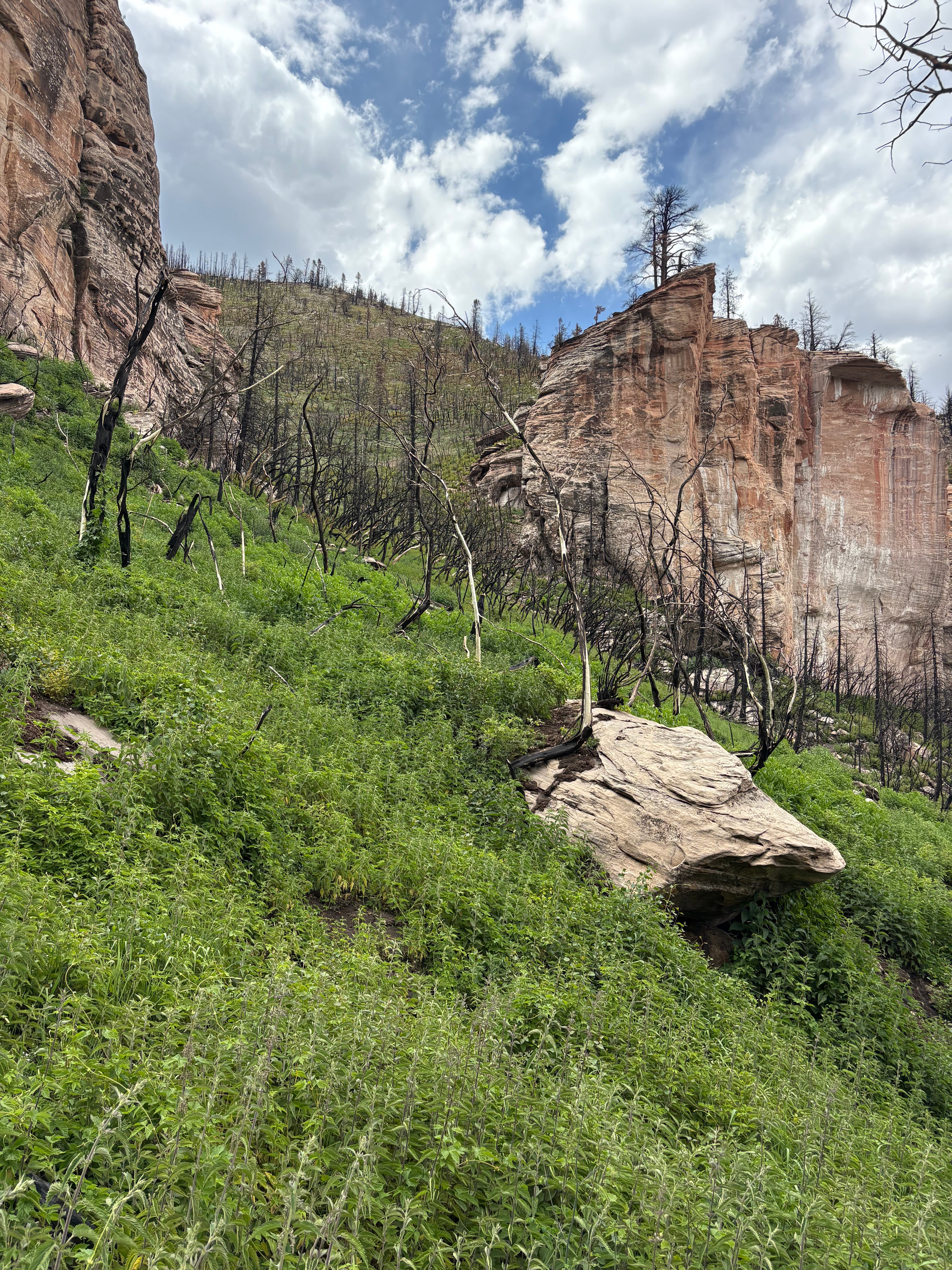
My first field trip to North Canyon Wilderness Area in Kaibab National Forest was a rude awakening. Just a few days after my arrival in Flagstaff, I found myself trudging through the scoured landscape of the Dragon Bravo Fire footprint in search of fresh water. Between the inches of ash and the nearly 40-degree slopes, I questioned my physical ability to make it to the target springs. As it turns out, our small SSI team wasn’t the only group braving the intense conditions looking for water. The first species regenerating around the burned springs were a menacing bouquet of poisonous plants – monkshood and painful stinging nettle. Vulnerable in the burned landscape, these plants pulled out all the stops to protect themselves as they staked the first claims on the spring water. My skin was scratched and burning when I returned to camp each evening.
On our next field trip to eastern Nevada, I learned that while recent fires made early emergence of those menacing plants more evident, thorns, spines, and poison commonly protect springs-dependent plant species across other landscapes. Towering rose, thistle, and nettle fiercely protected the springs we surveyed throughout unburned landscapes in Nevada as well. As it turns out, competition for fresh water brings out thorny behavior across many species. However, these defenses are imperative for both the plants and the springs health. Whether regenerating soil stability and shade for later successional species in a burned landscape, or producing flowers for pollinators, harsh defenses and competition create the framework for biodiversity and maintain the ecological integrity of springs.
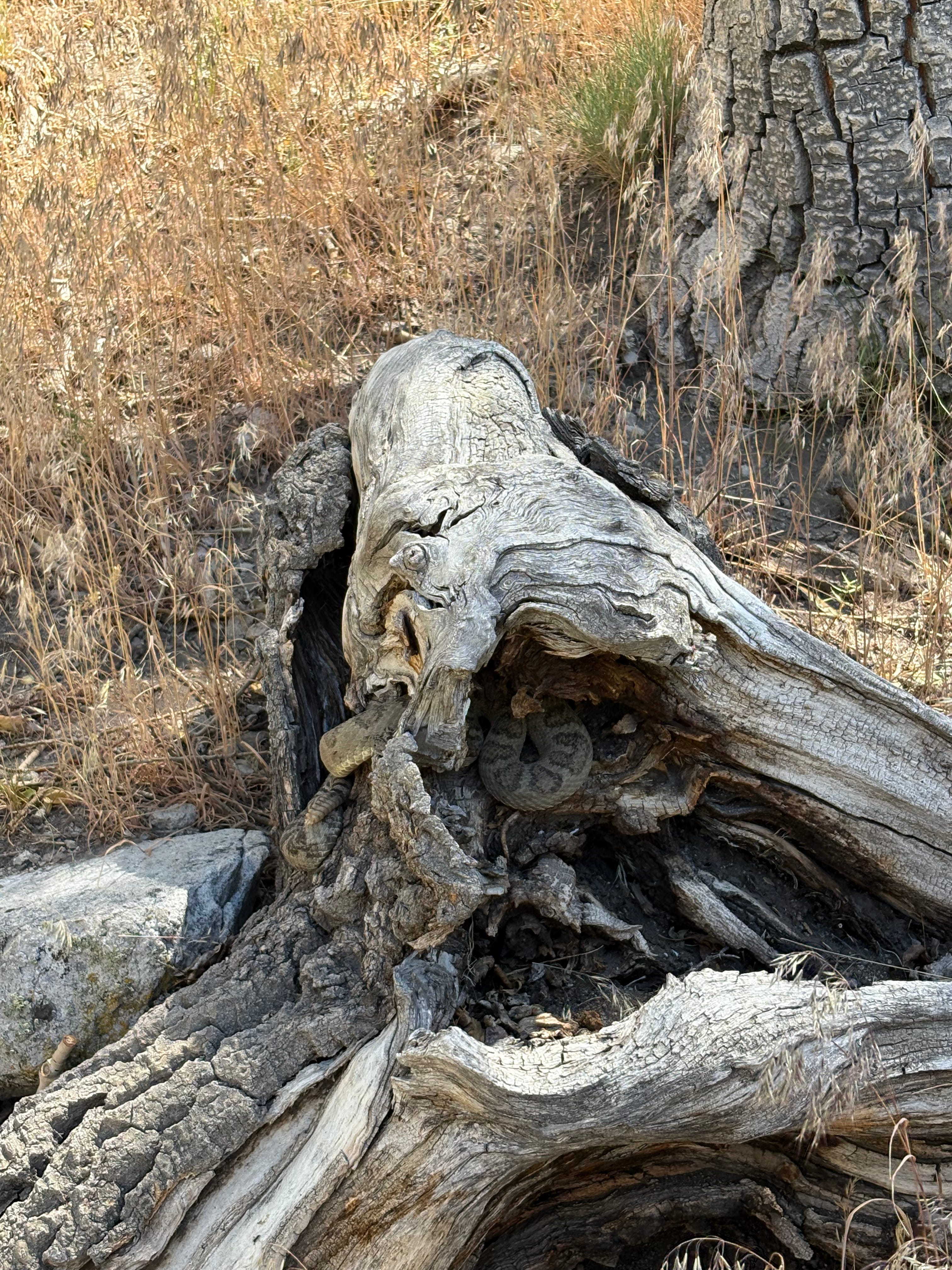
The demand for water and subsequent competition became more apparent to me as SSI surveyed more Nevada springs. I couldn’t help but recognize that ruthless competition for freshwater is universal. But the fight for water also creates beauty and balance. Springs attract life from far and wide, from robust plant species clustered together, to pollinators, predators, and prey, all vying for access to water. Even the smallest seeps, composed of only a narrow trickle of water, were surrounded and filled with spring-dependent species. Evidence of trophic health like elk beds, mountain lion kills, and bone yards gave the life filled springs a kind of eerie energy, another byproduct of the competition for water. While conducting fieldwork, our team came across as much death and danger as life and security: a gopher snake sneaking away with a large songbird for dinner; a rattlesnake coiled feet from the water source; wasps swarming pools of water; a freshly killed fawn covered in flies; and piles of butterfly wings, the remnants of some unknown, ruthless predator.
Complete with lush plant species, vibrant flowers, quaking aspens, pollinators of all kinds, glittering water, and bird songs, every part of these spring ecosystems were breathtaking and soothing. Even in the face of death, beauty arose. The speckled fawn body harbored vibrant life including the unique and colorful hairy carrion beetle, which was there to create more life by laying its eggs inside the decaying flesh. Despite the discomfort I experienced while accessing springs, feeling like I was a part of the competition, weaving past thorns and snakes and persevering on hikes through the heat to get to the heart of a spring, was most rewarding.
In fact, the most destruction I witnessed during my summer fieldwork as an SSI intern was not the fire-scorched landscape or antagonistic plants and predators. The saddest, most devoid springs were those which had been drastically altered for anthropogenic use. Unlike other springs I observed which were more or less untouched, human competition had disrupted the processes that these springs need to recover, causing altered trophic dynamics and reduced species diversity. Even for previously modified springs which had been undisturbed by humans for over a century, recovery was only just beginning. Our technology and management allow destruction of ecosystems that exceeds the temporal scales such ecosystems require for resilience. Such human manipulation outcompetes nature’s capacity.
As I struggled to reach water, just like other springs-dependent organisms, I was continuously reminded that I am part of a bigger ecological pattern. Competition over water is universal and it’s a good thing because it generates biodiversity and drives resilience. As we navigate water disputes in the West, spring ecosystems are clear reminders that not all conflict is bad. The tragedy is not that humans compete for water, it’s that we compete unfairly, and without regard for balance. Although we may bare our snarled teeth or show our thorns, we must remember to care for one another and understand that the fight for water is one we all face. Ultimately, working for the health of springs is an effort that benefits everyone. Watching nature heal and preserve balance provides me with hope…we can find that balance again too.
 | A guest post by
|